


May 14, 2021
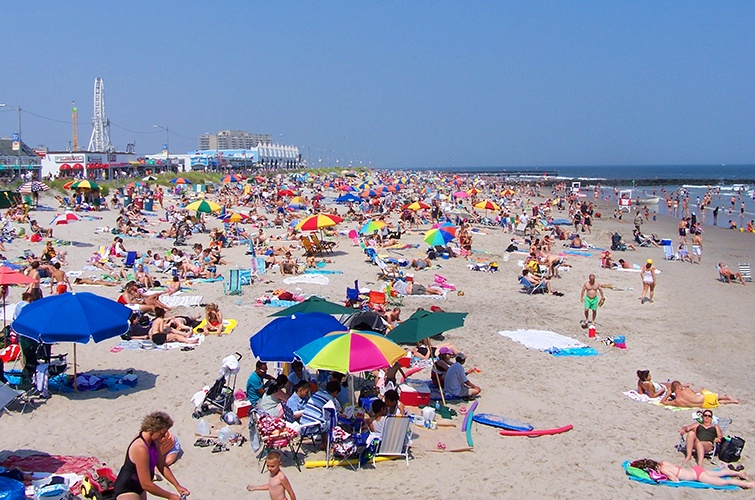
The Jersey Shore is recovering from COVID-19 restrictions and the availability of plenty of outdoor activities should help make summer 2021 a good season, if not quite yet at the Institute for Games, Hospitality and Tourism (LIGHT) and on Dec. Held May via Zoom.
They said while visitors might be back, convention business will recover more slowly. The loss of jobs during the pandemic has also created a new hiring dynamic that will take some time to compensate for.
The panel was moderated by Matthew Doherty, Executive Director of the Casino Reinvestment Development Authority.
The panelists were:
- Oliver Cooke: Professor of Economics at Stockton University and Editor of the South Jersey Economic Review
- Jamie Hoagland, director of marketing at Tennessee Avenue Beer Hall, Rhythm & Spirits, and Bar 32 in Atlantic City
- Larry Sieg, President and CEO of Meet AC
- Diane Wieland, Director of Tourism, Cape May County, Department of Tourism.
“This year seems more important than ever,” said LIGHT coordinator Jane Bokunewicz as coastal companies look to recover from the pandemic while maintaining safety protocols.
Doherty said there is reason to be optimistic. Issues like the continuation of the Open Container Act that allows people to drink alcoholic beverages outdoors, more police officers in the tourist district, and even renovated toilets are all signs that Atlantic City is open and ready for summer.
“We are very optimistic about an enormous year 2021 for Atlantic City and the Jersey Shore,” said Doherty.
A summary of the questions and answers follows:
Q: How was the 2020 season?
Larry Victory: Atlantic City did better than expected as casinos opened in July and people were ready to go outside.
Jamie Hoagland: The closure of the casino restaurants has taken people to other places. We ate outside and had queues every night.
Diane Wieland: The beach communities did well because people could be outside. We topped 2019 in September and October. The campsites were huge. They were safe, controlled, and brought in new customers who are now coming back. That helped a lot as we didn’t have Canadians.
Oliver Cooke: There was lockdown fatigue and the inability to fly to other destinations, as well as the ability to open casinos in July, pushed the season way beyond what was originally expected. The fourth quarter data showed a momentum we see through 2021.
Q: What changes will remain from 2020 and what will go?
Jamie Hoagland: Delivery services like Door Dash and Uber Eats will continue, and we will continue to promote outdoor dining.
Diane Wieland: Open spaces and nature-related options such as bird watching are preserved and are even growing. We have a large number of baby boomers, but now we’re also looking at millennials – what they’re interested in. The pandemic gave us more opportunities to research who is visiting and what they want.
Larry Sieg: We have to deal with customers more often. The congress business is still badly affected by the pandemic. We learned that we can work from home, but it’s still important to be in the office to get involved and brainstorm. We will continue a hybrid working model. The convention business becomes more competitive the more open things get.
Matt Doherty: Online gaming has started and sports betting has been off the charts. But we also check out non-gaming amenities like the arcade and water park at Showboat, smaller concerts. Cannabis is also a future tourism opportunity.
Diane Wieland: Before COVID, we realized that people would stay longer because they could work remotely. This was expanded to include second home owners and even businesses working remotely during the COVID. Sea Isle saw Airbnb bookings soar to $ 4 million in 2020.
Q: What is the new normal?
Diane Wieland: The number of winter residents is growing. Second home owners use their property and rent it out less. The year-round rental market is growing. This is the way companies can grow when they do more business throughout the year.
Oliver Cooke: The real estate market is hot. Single home prices in Atlantic and Cape May counties rose 18%. That is ahead of the state and national market. People are looking for more space and interest rates are low. More work from home and want flexibility. It will be interesting to keep an eye on whether they become permanent residents.
Larry Sieg: I call it the “now” normal. Conventions are getting a lot more competitive, and large conventions are now becoming smaller regional conventions, which is good for Atlantic City.
Jamie Hoagland: Being clean and safe is still important. We use QR code menus even though we still have paper menus. We did some tracking and found out of 25,000 scans that most were from New York City and specifically the Bronx, which was surprising.
Q: Have you changed your marketing or your message?
Diane Wieland: First we canceled the old campaign and just focused on saying that we are here and that we will be ready. When we were able to open, the message sure opened again and had exciting places and open spaces. That’s still the message.
Larry Sieg: We affirm that you can get in the car and come to the beach as people were not on planes. And the mindful approach of opening cleanly, safely and healthily. The focus now is on regenerative tourism and corporate responsibility. Companies come to meet, but also want to do something in the community – a beach cleanup or a neighborhood program.
Q: How would you describe the current situation in the region?
Oliver Cooke: The momentum started in the fourth quarter of 2020. There’s a tremendous tailwind to the economy due to lockdown fatigue and people wanting to get out. There is also the national discourse about job vacancies, but that will be shocking.
Larry Sieg: After a natural disaster, there is a recovery period, which is usually three to five years. People need to be aware of this. At the moment we can be 30% busy (in the Convention Center). That’s almost 10,000 people. We currently have 170 events on the books by 2025. I even got a call about an event for 2032.
Diane Wieland: We’re seeing an increase in smaller meetings and people rescheduling events that have been canceled.
Jamie Hoagland: We’re getting a lot of rebooking for events for 25-40 people. The phone keeps ringing. We even had a couple of outdoor wedding receptions for the fall.
Q: How do you see the impact of gaming and legalized cannabis in New York City?
Oliver Cooke: That’s a problem. You need to look at the bigger South Jersey economy and the importance of diversifying, not just gambling. Gambling is not going away, but it has already lost its importance.
Q: How do you feel about vaccination records?
Diane Wieland: We didn’t discuss that much. We only watch the number of people vaccinated.
Larry Sieg: We’re in a state building so we’re going to follow Trenton’s lead.
Jamie Hoagland: I don’t see us asking for one. We’ll just keep following social distancing.
Q: Have you had problems finding workers?
Jamie Hoagland: Yes, for the back of the house, the cooks, the dishwashers. We get loads of applications, but they either don’t show up for an interview or they don’t show up for work.
Oliver Cooke: There’s a lot going on there. Extended unemployment insurance is a double-edged sword. It may discourage job hunting, but it has also helped consumer spending. For some, the fear of getting COVID is still very real and the jobs that are very personal may be more difficult to fill. Child care is still a real problem. The J-1 student work visa program has a huge backlog and that’s huge for summer workers. And then there is just a general brain drain when people came back but looked for other jobs. This is all something to expect, it’s an obstacle to getting the job market back.
Q: Is Showboat’s arcade and water park sustainable all year round?
Matt Doherty: Yeah. People want a January through March experience that is local. Showboat’s business model is to come up with ideas that others don’t.
Q: How can we make Atlantic City and the Boardwalk more exciting and America’s playground again?
Larry Sieg: We need a uniform destination marketing organization. Now everything is in silos. We’re looking at a rebranding. We have to be competitive to promote not just Atlantic City but the entire Jersey Shore.
Matt Doherty: We work with the merchants and the city. The promenade is the city’s greatest capital. We need to look at signage, lighting, and toilets. The signage looks tired.
Q: What do you forecast for 2021?
Diane Wieland: The momentum started last year. It’s going to be a great year. Rents are increasing. It may take 2-3 years to get back to 2019 levels, but we hope for sooner.
Oliver Cooke: The summer should be excellent, but the comparative base is low.
Jamie Hoagland: We’re excited and predicting a great summer.
Larry Sieg: I think Atlantic City is going to have a great summer. As more restrictions on the outdoors are lifted, more people who want to go outside will fall. Meetings and conventions are still based on government restrictions, but even 30% capacity will help. We focus on outdoor and sporting events that can be done safely. We also look at film production companies doing the filming and photoshoot of Sports Illustrated.
How these predictions will develop will be discussed in October when LIGHT will present the autumn Shoreview on October 21.
More than 75 people attended the event. A video recording of the Shorecast can be found on the Levenson Institute website at stockton.edu/light.
For more business news, visit NJB News Now.
On the subject of matching items: